
Running a small business in the UK comes with unique financial challenges that require smart solutions. Business credit cards have emerged as powerful tools for entrepreneurs looking to manage expenses efficiently while accessing flexible funding options. Consider James, who runs a growing web design agency in Leeds. After struggling with expense management and cash flow issues, he applied for a business credit card with a £15,000 limit. Now his team has individual cards with customized spending limits, all expenses are automatically categorized, and the 1% cashback generates substantial annual savings. Most importantly, the 45-day interest-free period helps bridge the gap when client payments are delayed.
Whether you’re a sole trader just starting out or an established SME looking to optimize your financial operations, understanding how business credit cards work—and choosing the right one—can significantly impact your success. Let’s explore everything you need to know about business credit cards for small businesses in the UK market.
Features and Benefits of Business Credit Cards
Business credit cards offer specialized features designed specifically for company finances. Unlike personal cards, these financial tools provide benefits tailored to business operations, helping you manage expenses more efficiently while accessing perks that support growth.
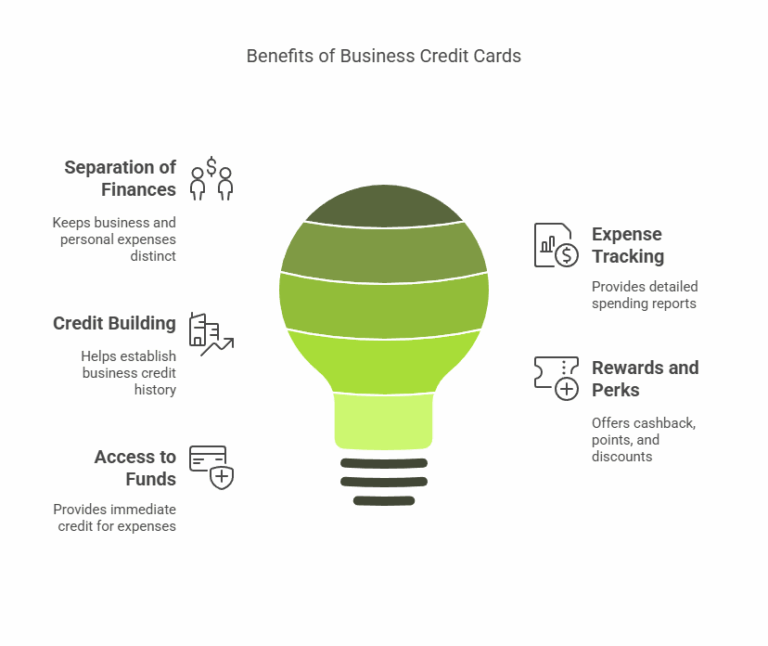
Separation of Business and Personal Finances
One of the most significant advantages of using a business credit card is the clear separation it creates between your personal and business finances. This isn’t just about staying organized—it’s a fundamental business practice with important implications.
When you use a dedicated business credit card, all your company expenses appear on a separate statement from your personal spending. This clear division makes it substantially easier to track business expenditures and simplifies the accounting process. At tax time, you won’t need to sift through personal statements trying to identify which restaurant charge was a client lunch and which was a family dinner.
This separation also provides a layer of legal protection. For limited companies, maintaining distinct business and personal finances helps reinforce the corporate veil—the legal separation between you as an individual and your business entity. Without this clear division, you risk “piercing the corporate veil,” which could potentially expose your personal assets to business liabilities.
How much simpler would your quarterly VAT returns be if all business expenses were neatly compiled on dedicated statements? No more hunting through personal accounts or reconciling cash purchases—everything documented in one place.
Expense Tracking and Reporting
Modern business credit cards come equipped with sophisticated expense tracking and reporting tools that transform financial management. These features give you unprecedented visibility into your company’s spending patterns.
Most business credit cards provide detailed monthly statements that automatically categorize expenses—separating travel costs from office supplies, client entertainment from software subscriptions. Many card issuers also offer integrated digital platforms where you can:
- View real-time transaction data
- Generate customized spending reports
- Export financial data to accounting software
- Attach digital receipts to transactions
- Add notes or project codes to specific purchases
These capabilities dramatically reduce the administrative burden of expense management. Rather than manually entering data into spreadsheets or accounting systems, transactions flow automatically into categorized reports. This automation not only saves time but also improves accuracy by eliminating manual data entry errors.
For businesses with multiple employees making purchases, these tracking features become even more valuable. You can instantly see who spent what, when, and where—providing accountability and transparency across your organization.
The reporting capabilities also offer strategic insights. By analyzing spending patterns over time, you can identify opportunities to negotiate better terms with frequent suppliers, recognize seasonal trends in your cash flow, or spot unusual spending that might indicate inefficiencies or even fraud.
Building Business Credit
Just as individuals have personal credit scores, businesses develop their own credit profiles. Using a business credit card responsibly is one of the most effective ways to establish and build a strong business credit history—a valuable asset that can unlock future financial opportunities.
When you consistently make on-time payments and manage your business credit card account responsibly, credit reference agencies record this positive behavior in your business credit file. Over time, this helps build a robust business credit score separate from your personal credit rating.
A strong business credit profile offers several significant advantages:
- Access to higher credit limits and more favorable terms on future financing
- Better negotiating power with suppliers and potential business partners
- Enhanced credibility when bidding on contracts, especially with larger organizations
- Reduced need for personal guarantees on business financing as your company establishes its own creditworthiness
- Protection of your personal credit score from business-related financial activities
For new businesses, establishing credit can be challenging. Many lenders hesitate to extend credit to companies without a proven track record. Business credit cards often serve as an entry point to the credit system, allowing you to begin building your business credit profile even in the early stages of your company’s development.
To maximize the credit-building benefits, ensure your business credit card reports to the major business credit bureaus (like Experian, Equifax, and Creditsafe in the UK). Not all cards report to all bureaus, so this is worth confirming before applying.
Discover strategies for improving your business credit score
Rewards and Perks
Business credit cards typically offer rewards programs that can deliver substantial value back to your company. These programs are often tailored specifically to common business expenses, making them potentially more lucrative than personal card rewards for business spending.
The rewards landscape for UK business credit cards includes:
- Cashback programs that return a percentage of your spending directly to your account
- Points systems that can be redeemed for business travel, office supplies, or statement credits
- Air miles that reduce the cost of business travel
- Discounts on business services from partner companies
Many cards offer enhanced rewards rates in categories where businesses typically spend more. For example, you might earn 3% cashback on office supply purchases, 2% on telecommunications services, and 1% on all other spending. By aligning your card choice with your spending patterns, you can maximize these benefits.
Beyond the core rewards programs, business credit cards often include additional perks that provide tangible value:
- Complimentary travel insurance for business trips
- Purchase protection on business equipment and supplies
- Extended warranty coverage on eligible purchases
- Airport lounge access for traveling executives
- Concierge services to assist with travel arrangements or client entertainment
- Discounted or free access to business software and services
These rewards and perks essentially function as a discount on your normal business expenses. A card offering 1.5% cashback effectively gives you a 1.5% price reduction on everything you buy—savings that can add up to hundreds or thousands of pounds annually depending on your spending volume.
Have you calculated how much your business could save with the right rewards program? For a business spending £10,000 monthly, even a 1% cashback rate generates £1,200 in annual savings.
Convenient Access to Funds
Business credit cards provide immediate access to a pre-approved line of credit, offering crucial financial flexibility that can help navigate the ups and downs of business cash flow. This ready availability of funds serves as a financial safety net for unexpected expenses or opportunities.
For small businesses, cash flow management is often one of the biggest challenges. Clients may pay invoices late, seasonal fluctuations can affect revenue, or unexpected expenses may arise. A business credit card provides a buffer during these periods, allowing you to:
- Cover essential expenses when cash reserves are temporarily low
- Take advantage of limited-time supplier discounts even when current cash flow is tight
- Respond quickly to emergency situations without disrupting normal operations
- Bridge timing gaps between outgoing payments and incoming revenue
This flexibility is particularly valuable for businesses with irregular income patterns or those experiencing rapid growth. When a growth opportunity requires immediate investment—perhaps a discounted inventory purchase or essential equipment upgrade—having immediate access to credit can make the difference between capitalizing on the opportunity or missing out.
Unlike business loans or overdrafts, which often involve lengthy application processes and strict eligibility criteria, business credit cards provide pre-approved spending power you can tap into whenever needed. There’s no need to apply for funding each time you need it—the credit line is always available, up to your approved limit.
Learn effective cash flow management strategies for small businesses
Employee Expense Management
Managing employee expenses efficiently is a challenge for growing businesses. Business credit cards offer elegant solutions to this common pain point through supplementary cards and integrated expense management systems.
With a business credit card account, you can issue additional cards to key team members while maintaining control over spending. This approach offers several advantages:
- Customized spending limits for each employee card, allowing you to set appropriate thresholds based on role and requirements
- Real-time visibility into employee spending through online portals or mobile apps
- Elimination of reimbursement processes that create administrative work and force employees to temporarily cover company expenses
- Detailed tracking of who spent what, simplifying accountability and budget management
- Consistent categorization of expenses across the organization
For employees, having a company card removes the burden of using personal funds for business expenses and waiting for reimbursement. This improves employee satisfaction while ensuring they have the resources needed to perform their roles effectively.
From a management perspective, centralized employee spending through business credit cards dramatically simplifies expense oversight. Rather than processing multiple expense reports with various receipt formats and payment methods, all transactions appear on a single statement with standardized data.
Many business credit cards also integrate with expense management software, further streamlining the process. These integrations can automatically match digital receipts to transactions, flag policy violations, and generate approval workflows for expenses that exceed predetermined thresholds.
Types of Business Credit Cards
The UK market offers various business credit card types, each designed to meet different business needs and priorities. Understanding these options helps you select a card that aligns with your specific requirements and spending patterns.
Cashback Credit Cards
Cashback business credit cards provide a straightforward way to earn back a percentage of your spending. These cards are particularly popular among small business owners who appreciate their simplicity and tangible returns.
When you use a cashback business credit card, you earn back a percentage of every pound spent—typically between 0.5% and 5%, depending on the card and spending category. This cashback accumulates in your account and can usually be redeemed as statement credits, direct deposits to your bank account, or sometimes as vouchers for specific retailers.
The Capital on Tap Business Credit Card exemplifies this category, offering unlimited 1% cashback on all spending with no annual fee. For a business spending £5,000 monthly, this translates to £600 in annual cashback—essentially a 1% discount on all business expenses.
Some cashback cards offer tiered rewards structures with higher percentages for specific categories. For example, you might earn 3% on office supplies, 2% on travel, and 1% on all other purchases. These tiered structures work best when they align with your business’s major spending categories.
Cashback cards are ideal for businesses that:
- Want simple, transparent rewards without complicated redemption rules
- Prefer cash returns over travel benefits or points systems
- Have predictable spending patterns in common business categories
- Don’t want to spend time optimizing complex rewards programs
The primary advantage of cashback cards is their simplicity—the rewards are easy to understand, track, and use. There’s no need to navigate complex redemption options or worry about points expiring. The cash goes straight back into your business, improving your bottom line.
Travel Rewards Credit Cards
For businesses with significant travel expenses, travel rewards credit cards offer specialized benefits that can substantially reduce the cost of business trips while providing enhanced travel experiences.
These cards typically earn points or miles on purchases that can be redeemed for flights, hotel stays, car rentals, and other travel expenses. The redemption value often exceeds standard cashback rates when used specifically for travel, making these cards particularly valuable for businesses with frequent travel needs.
Beyond the core points-earning structure, travel rewards business credit cards typically include travel-specific perks such as:
- Complimentary airport lounge access
- Free checked bags on flights
- Priority boarding
- Hotel status upgrades
- No foreign transaction fees
- Travel insurance coverage
- Global entry or TSA PreCheck fee credits
The American Express Business Gold Card is a prominent example in this category, offering membership rewards points that can be transferred to various airline and hotel partners, along with comprehensive travel benefits and insurance.
Travel rewards cards work best for businesses that:
- Have regular domestic or international travel requirements
- Entertain clients at restaurants or hotels frequently
- Can benefit from airport lounge access and travel upgrades
- Have the flexibility to book travel based on points availability
- Want to enhance the travel experience for employees
When evaluating travel rewards cards, pay attention to transfer partners and redemption options. The most valuable cards offer flexible points that can be transferred to multiple airlines and hotel programs, maximizing your redemption options and potential value.
Secured Credit Cards
Secured business credit cards provide an accessible entry point to business credit for companies with limited trading history or previous credit challenges. Unlike standard credit cards, secured cards require a security deposit that typically determines your credit limit.
This security deposit reduces the risk for the card issuer, making them more willing to extend credit to businesses that might not qualify for traditional unsecured cards. The deposit is held as collateral and is refundable when you close the account in good standing or upgrade to an unsecured card.
Secured business credit cards serve several important purposes:
- Establishing initial business credit for new companies
- Rebuilding business credit after financial difficulties
- Providing a stepping stone to more premium financial products
- Offering basic business credit card functionality with lower qualification barriers
While secured cards typically have lower credit limits and fewer rewards than their unsecured counterparts, they report to business credit bureaus just like standard cards. This reporting allows you to build a positive credit history through responsible use, potentially qualifying for better financial products in the future.
Most secured business credit cards in the UK require deposits ranging from £200 to £3,000, with credit limits set at or near the deposit amount. After demonstrating responsible use for 6-12 months, many issuers will review your account for a potential upgrade to an unsecured card, at which point your deposit would be refunded.
For businesses using secured cards as a credit-building tool, focus on:
- Making all payments on time
- Keeping utilization below 30% of your credit limit
- Monitoring your business credit reports regularly
- Requesting periodic reviews of your account status
Charge Cards
Charge cards represent a distinct category of business payment cards with unique characteristics that set them apart from traditional credit cards. The fundamental difference is that charge cards typically require payment in full each month, with no option to carry a balance.
This payment structure creates several distinctive features:
- No pre-set spending limit (though purchases are approved based on spending patterns, payment history, and financial profile)
- No interest charges (since balances can’t be carried forward)
- Often higher annual fees than standard credit cards
- Typically more robust rewards programs and business benefits
- Stricter approval requirements
The American Express Business Platinum Card is a classic example of a business charge card, offering premium travel benefits, comprehensive purchase protections, and extensive rewards in exchange for a higher annual fee and full monthly payment requirement.
Charge cards are particularly well-suited for businesses that:
- Always pay balances in full
- Need higher spending capacity without fixed limits
- Value premium rewards and benefits
- Have established business credit and strong cash flow
- Want to enforce disciplined spending practices
The lack of a revolving credit option means charge cards don’t contribute to credit utilization ratios in the same way traditional credit cards do. This can be advantageous for businesses making large purchases that might otherwise push them over recommended utilization thresholds.
The mandatory full payment requirement also enforces financial discipline, preventing the accumulation of high-interest debt that can burden businesses using traditional credit cards. However, this same feature means charge cards don’t provide the same flexibility during cash flow crunches.
Business Credit Cards with Introductory Offers
Many business credit cards entice new customers with attractive introductory offers that provide significant upfront value. These promotional features can deliver substantial benefits during the initial period of card membership.
Common introductory offers include:
- 0% interest periods: Many cards offer interest-free periods on purchases and/or balance transfers, typically ranging from 3 to 15 months. These interest-free windows can be invaluable for financing larger purchases or transferring existing high-interest debt.
- Enhanced welcome bonuses: Cards may offer substantial points, miles, or cashback bonuses after meeting a specified spending threshold within the first few months. These bonuses often represent the equivalent of 10-20% return on that initial spending.
- Waived annual fees: Cards that normally carry annual fees frequently waive them for the first year, allowing you to test the card’s benefits without the upfront cost.
- Additional rewards rates: Some cards offer higher cashback or points earning rates during the introductory period, sometimes doubling the standard rewards rate.
The NatWest Business Credit Card, for instance, has previously offered introductory periods with 0% interest on purchases for new cardholders, providing valuable breathing room for businesses making significant investments.
When evaluating cards with introductory offers, consider:
- How the offer aligns with your immediate business needs
- Whether you can meet spending requirements for welcome bonuses
- What happens after the introductory period ends
- If the card’s ongoing benefits justify keeping it after promotions expire
While introductory offers can provide excellent short-term value, the card’s long-term benefits should align with your business’s ongoing needs. Avoid the temptation to chase promotions that don’t match your typical spending patterns or business requirements.
Choosing the Right Business Credit Card
Selecting the right business credit card requires careful consideration of your specific business needs, spending patterns, and financial goals. The ideal card will complement your business operations while providing valuable benefits that outweigh any associated costs.
Start by evaluating your typical monthly expenses and identifying your primary spending categories. Do you spend heavily on travel, office supplies, telecommunications, or dining? Different cards excel in different categories, so understanding your spending profile helps narrow your options.
Next, consider your payment habits. Do you typically pay your balance in full each month, or do you sometimes need to carry a balance? If you always pay in full, you might prioritize rewards over interest rates. If you occasionally carry a balance, a lower APR might be more important than premium rewards.
Also think about your business’s growth trajectory. A startup might benefit from a card with lower fees and simpler qualification requirements, while an established business might leverage premium cards with higher limits and enhanced benefits.
Don’t forget to evaluate the technology and integration capabilities of the card’s online platform. Does it connect with your accounting software? Does it offer mobile app access? These features can significantly impact the card’s utility for your business.
Exploring the Pros and Cons of Using a Business Credit Card for Your Business
Like any financial tool, business credit cards come with advantages and potential drawbacks. Understanding both sides helps you make an informed decision and use your card responsibly.
5 Benefits of Using a Business Credit Card
- Improved Cash Flow Management: Business credit cards provide a buffer between when you need to pay for expenses and when you need to pay your credit card bill. This payment grace period—typically 21 to 55 days depending on the card and timing of purchases—can significantly improve your cash flow management.
- Simplified Tax Preparation: With business expenses consolidated on dedicated statements, tax preparation becomes much simpler. Many business credit cards provide year-end summaries categorized by expense type, making it easy to identify deductible business expenses.
- Enhanced Purchasing Power: Business credit cards often provide higher spending limits than personal cards, giving you the purchasing power to seize opportunities or address emergencies without depleting cash reserves.
- Fraud Protection: Business credit cards typically offer robust fraud protection features, including zero liability for unauthorized charges, real-time fraud monitoring, and instant purchase notifications. These protections safeguard your business from financial losses due to fraud.
- Business-Specific Benefits: Many business credit cards offer perks tailored specifically to business needs, such as discounted shipping, office supply savings, telecommunications credits, or enhanced insurance on business equipment purchases.
Cons of Using a Business Credit Card
- Higher Interest Rates: Business credit cards often carry higher interest rates than personal cards or traditional business loans. If you regularly carry a balance, these higher rates can significantly increase your cost of borrowing.
- Personal Liability: Many business credit cards require a personal guarantee, meaning you’re personally liable for the debt even if your business fails. This personal liability can put your personal assets at risk if your business encounters financial difficulties.
- Annual Fees: Premium business credit cards often charge substantial annual fees. While the benefits may outweigh these costs for some businesses, others might find the fees difficult to justify based on their spending patterns and needs.
- Potential for Overspending: The convenience of credit cards can sometimes lead to less disciplined spending. Without proper controls and regular monitoring, businesses might find themselves accumulating more debt than anticipated.
- Impact on Personal Credit: Some business credit card issuers report account activity to personal credit bureaus as well as business bureaus. Late payments or high utilization could potentially impact your personal credit score.
By weighing these pros and cons against your specific business situation, you can determine whether a business credit card is the right financial tool for your needs.
Selecting the Perfect Fit: How to Choose the Right Business Credit Card for Your Needs
Finding the ideal business credit card requires a methodical approach that considers your business’s unique characteristics and financial needs.
Assess Your Business’s Needs
1. Identify Spending Patterns
Begin by analyzing your business’s typical monthly expenses. Review your recent financial statements and categorize your spending to identify where most of your money goes. Do you spend heavily on:
- Travel and accommodations?
- Office supplies and equipment?
- Advertising and marketing?
- Telecommunications and utilities?
- Dining and client entertainment?
Different cards offer enhanced rewards in specific categories, so understanding your spending patterns helps identify cards that will maximize your returns. For example, if your business spends £2,000 monthly on travel, a card offering 3x points on travel expenses would generate significantly more value than one offering 1% flat cashback.
2. Evaluate Cash Flow Requirements
Consider your business’s typical cash flow cycle and how a credit card fits into your financial management strategy. Ask yourself:
- Do you need a card primarily to smooth out cash flow irregularities?
- Are you looking to finance specific large purchases?
- Will you typically pay your balance in full each month?
- Do you need to track expenses for multiple projects or departments?
If your cash flow is irregular, you might prioritize cards with longer grace periods or introductory 0% APR offers. If you always pay in full, rewards potential might be your primary consideration.
3. Consider Employee Usage
If you plan to issue cards to employees, evaluate how many cards you’ll need and what controls you require:
- Will employees need different spending limits based on their roles?
- Do you need the ability to restrict certain categories of spending?
- How important is real-time notification of employee purchases?
- Will employees need to code expenses to specific projects or departments?
Cards with robust expense management systems become increasingly valuable as your team grows and spending becomes more complex.
Compare Card Features and Benefits
Once you understand your needs, compare the features of different cards to find the best match. Create a comparison spreadsheet that includes:
- Annual fees and whether they’re waived for the first year
- Rewards rates in your primary spending categories
- Sign-up bonuses and spending requirements to earn them
- Foreign transaction fees (if you do business internationally)
- Additional perks like travel insurance or purchase protection
- Integration capabilities with your accounting software
Don’t just focus on the headline rewards rate—calculate the actual value based on your specific spending patterns. A card offering 5% back on office supplies might sound impressive, but if office supplies represent only 5% of your spending, the overall value might be less than a card offering 2% back on everything.
Review Card Terms and Conditions
The fine print matters when selecting a business credit card. Pay particular attention to:
- The APR for purchases, balance transfers, and cash advances
- How interest is calculated and when it begins accruing
- Grace periods for payment before interest is charged
- Penalty fees for late payments or exceeding your credit limit
- Rewards program terms, including point expiration and redemption minimums
- Any spending caps on bonus categories
Understanding these details helps you avoid unexpected costs and maximize the card’s benefits.
Business Credit Card Deep Dive & Considerations:
1. Interest Rates and Grace Periods
Interest rates on UK business credit cards typically range from 15% to 30% APR, significantly higher than most traditional business loans. This makes understanding exactly how and when interest is charged critically important.
Most business credit cards offer a grace period—typically 21 to 25 days after your billing cycle closes—during which you can pay your balance in full without incurring interest charges. This means you could potentially have up to 56 days interest-free from the date of purchase (if you make a purchase at the beginning of your billing cycle).
However, this grace period usually applies only if you paid your previous balance in full. If you carry a balance from month to month, new purchases typically begin accruing interest immediately. Some cards also calculate interest daily rather than monthly, which can increase your costs if you carry balances.
For cash advances, the rules are typically different—interest usually begins accruing immediately with no grace period, and the APR is often higher than for purchases.
2. Penalties and Late Payment Fees
Late payment fees on UK business credit cards typically range from £12 to £25 per occurrence. Beyond these immediate fees, late payments can trigger penalty APRs that are substantially higher than your standard rate—sometimes exceeding 30%.
Late payments may also be reported to credit bureaus, potentially damaging your business credit profile. Some cards implement additional penalties, such as forfeiture of rewards earned during that billing cycle or suspension of card privileges.
Many card issuers offer automatic payment options that can help you avoid late fees. Setting up a direct debit for at least the minimum payment (though preferably the full balance) provides insurance against forgetting a payment deadline.
3. Credit Limit Increase Policies
Most UK business credit card issuers review accounts periodically for credit limit increases, typically after 6-12 months of responsible usage. These reviews may happen automatically or require you to request an increase.
Factors considered in credit limit decisions typically include:
- Payment history with the card issuer
- Credit utilization patterns
- Overall business credit profile
- Business revenue and growth
- Length of relationship with the card issuer
Some issuers allow you to request credit limit increases through your online account, while others require a phone call. Be prepared to provide updated information about your business finances when requesting an increase.
Higher credit limits can benefit your business by providing more financial flexibility and potentially improving your credit utilization ratio—but only if you maintain disciplined spending habits.
4. Billing and Payment Options
Modern business credit cards offer various billing and payment options designed to fit different business preferences. These typically include:
- Online account management with 24/7 access to transactions and statements
- Mobile apps for on-the-go account management
- Automatic payments through direct debit
- Multiple payment methods including bank transfers and debit cards
- Customizable statement closing dates to align with your cash flow cycle
- Options for paper or paperless statements
- Ability to download transactions in formats compatible with accounting software
Some business credit cards also offer flexible payment dates, allowing you to choose when your payment is due each month. This feature can be particularly valuable for aligning payment dates with your business’s revenue cycle.
5. Customer Support and Service
The quality of customer support can significantly impact your experience with a business credit card, especially when issues arise. Leading business credit card providers offer:
- Dedicated business customer service lines separate from personal card support
- Extended support hours that accommodate business schedules
- Specialized representatives familiar with business banking needs
- Multiple contact channels including phone, email, chat, and social media
- Relationship managers for higher-tier business accounts
When researching cards, look for reviews specifically mentioning customer service quality. Pay particular attention to how efficiently the issuer resolves disputes, handles fraud claims, and responds to account questions.
Consider Your Creditworthiness
Your business’s credit profile significantly influences which cards you can qualify for and what terms you’ll receive. Most premium business credit cards require good to excellent credit scores, typically 670 or higher for the business owner.
For newer businesses without established credit histories, card issuers typically rely heavily on the owner’s personal credit score. As your business builds its own credit profile, this reliance on personal credit may decrease, but many small business cards will always maintain some connection to the owner’s personal creditworthiness.
If your credit score is below 670, you might consider:
- Secured business credit cards that require a security deposit
- Credit builder cards designed for businesses with limited credit history
- Cards from your existing business bank where your banking relationship might offset credit concerns
Remember that each credit card application typically generates a hard inquiry on your credit report, which can temporarily lower your score. Avoid applying for multiple cards simultaneously—instead, research thoroughly and apply selectively for cards you’re likely to qualify for.
Read Reviews and Seek Recommendations
Before applying for any business credit card, research real-world experiences from other business owners. Professional reviews provide structured comparisons, while user reviews often highlight practical aspects of the card experience that marketing materials might not address.
Look for reviews and recommendations from businesses similar to yours in size, industry, and spending patterns. Their experiences will likely be more relevant than generic reviews.
Industry-specific forums and business networking groups can be excellent sources of candid feedback about different card options. Don’t hesitate to ask fellow business owners which cards they use and why they chose them.
Pay particular attention to reviews mentioning:
- Actual customer service experiences
- How easily rewards are redeemed
- The reliability of the online platform and mobile app
- Any unexpected fees or policy changes
- How well the card integrates with accounting systems
Apply and Monitor Your Usage
Once you’ve selected a card, prepare for the application process by gathering your business documentation, including:
- Business registration information
- Tax identification numbers
- Financial statements or projections
- Personal identification and financial information
Most UK business credit card applications can be completed online, with decisions often provided within minutes. Some applications may require additional review, particularly for higher credit limits or newer businesses.
After receiving your card, establish good habits from the start:
- Set up account alerts for large purchases, payment due dates, and unusual activity
- Integrate your card with your accounting software if possible
- Create a system for tracking receipts and categorizing expenses
- Review statements thoroughly each month
- Schedule regular reviews of your rewards accumulation and redemption options
Mastering Responsible Management of Your Business Credit Card
Responsible management ensures your business credit card remains an asset rather than becoming a financial burden.
Understand Your Credit Card Terms and Conditions
Take time to thoroughly read your cardholder agreement, paying special attention to:
- Exactly how interest is calculated and when it applies
- What actions might trigger penalty rates or fees
- How rewards are earned, and any limitations on their use
- Any benefits that require activation or registration
- Procedures for disputing charges or reporting fraud
Keep this information accessible and ensure anyone using the card understands the key terms.
Create a Clear Spending Plan
Establish clear guidelines for business credit card usage:
- Define which expenses are appropriate for the card
- Set monthly or quarterly spending budgets by category
- Create approval processes for purchases above certain thresholds
- Document policies for employee card usage
- Align card spending with your overall business budget
Without clear boundaries, it’s easy for credit card spending to expand beyond intended limits, potentially creating cash flow problems when payment comes due.
Track and Monitor Your Expenses
Implement systems for real-time expense tracking:
- Use your card issuer’s mobile app for immediate purchase notifications
- Require digital receipt submission for all card purchases
- Regularly reconcile receipts against statement charges
- Categorize expenses consistently for accurate financial reporting
- Review spending patterns monthly to identify trends or anomalies
Proactive monitoring prevents surprises at statement time and helps identify unauthorized charges quickly.
Pay Your Balance in Full and On Time
Whenever possible, pay your balance in full each month to avoid interest charges. Set up:
- Calendar reminders several days before payment due dates
- Automatic payments for at least the minimum amount due
- Cash flow projections that account for upcoming card payments
- Emergency funds to cover card payments during revenue fluctuations
If you must carry a balance occasionally, create a specific repayment plan to eliminate the balance as quickly as possible.
Avoid Excessive Utilisation of Credit
Credit utilization—the percentage of your available credit that you’re using—affects both your business credit score and your card’s utility as an emergency funding source.
Financial experts recommend keeping utilization below 30% of your credit limit. For a card with a £10,000 limit, that means keeping your balance below £3,000 whenever possible.
If you regularly approach your credit limit, consider:
- Requesting a credit limit increase
- Making mid-cycle payments to reduce your balance
- Distributing expenses across multiple cards
- Adjusting your payment timing to reduce reported balances
Regularly Review Your Credit Card Activity
Schedule time each week to review recent transactions and each month to thoroughly analyze your statement:
- Verify that all charges are legitimate and accurate
- Confirm that employee purchases comply with company policies
- Check that recurring charges are still authorized and appropriate
- Ensure that returns and credits have been properly applied
- Verify that interest and fees are calculated correctly
This regular review helps catch errors or fraud quickly and keeps you aware of your current financial position.
Use Rewards Wisely
Business credit card rewards can provide significant value, but only if you use them strategically:
- Understand exactly how much your rewards are worth in different redemption scenarios
- Redeem points or miles for their highest-value options
- Consider the timing of redemptions (some travel rewards fluctuate in value)
- Align rewards with business needs rather than personal preferences
- Track reward expiration dates to avoid losing value
Some businesses designate rewards for specific purposes—perhaps funding team events, reducing travel costs, or reinvesting in marketing initiatives.
By implementing these responsible management practices, your business credit card becomes a powerful financial tool rather than a potential liability. The discipline you establish around card usage contributes to stronger overall financial management and helps build a positive credit profile for your business.
Get your business credit card quotes through Guavas Finance within 24-48 hours. Start your quote now.
Business credit cards offer a flexible and convenient financing option for businesses of all sizes. Throughout this article, we have examined the introduction to business credit cards, the pros and cons of using them, choosing the right card for your needs, and managing your business credit card responsibly. Business owners can make informed decisions that align with their specific requirements by understanding the benefits, risks, and considerations associated with business credit cards. It is essential to assess your business’s needs, compare card features and terms, and manage your credit card responsibly by tracking expenses, paying balances on time, and utilising rewards wisely. With proper understanding and responsible management, business credit cards can be a valuable tool to support your business’s financial goals, streamline expenses, build credit, and pave the way for long-term success.