
Invoice factoring has become an essential financial tool for businesses seeking to manage cash flow effectively. By converting outstanding invoices into immediate cash, companies can address working capital needs without incurring debt. Let’s take a look and see if we can understand the invoice factoring process and explain it in detail for you.
Imagine a small manufacturing firm that has just secured a large order from a major retailer. The payment terms are set at 60 days, but the firm needs to purchase raw materials immediately to fulfill the order. Invoice factoring allows the firm to sell its invoices to a factoring company, receiving a significant portion of the invoice value upfront. This process not only provides the necessary funds to continue operations but also alleviates the stress of waiting for customer payments.
This article delves into the intricacies of invoice factoring, explaining its definition, process, and benefits, while also addressing potential drawbacks. Whether you’re new to invoice factoring or looking to deepen your understanding, this guide offers valuable insights to navigate this financial strategy effectively.
What is Invoice Factoring?
Invoice factoring is a financial transaction where a business sells its accounts receivable, or invoices, to a third-party company known as a factor. This sale provides the business with immediate cash, typically 80-90% of the invoice value, allowing it to meet short-term financial obligations. The factor then assumes the responsibility of collecting payments from the business’s customers. Once the invoices are paid, the factor remits the remaining balance to the business, minus a fee for their services. This process is distinct from traditional loans, as it does not require collateral or incur debt, making it an attractive option for businesses with significant outstanding invoices.
Invoice factoring is particularly beneficial for companies that operate on extended payment terms or experience seasonal fluctuations in cash flow. By leveraging their accounts receivable, businesses can access the funds needed to cover expenses, invest in growth opportunities, or manage debt more effectively.
Explore our case studies to see how invoice financing has helped businesses like yours.
How Does Invoice Factoring Work?
The invoice factoring process involves several key steps, each designed to provide businesses with immediate liquidity while outsourcing the collection process. It begins when a business issues an invoice to a customer for goods or services provided. If the business needs immediate cash, it can sell this invoice to a factoring company. The factor verifies the invoice’s validity and advances a percentage of its value to the business. This advance provides the business with working capital to meet its financial obligations.
Once the factor takes over the invoice, they are responsible for collecting payment from the customer. This distinguishes factoring from debt collection, as the factor deals with non-overdue invoices. After the customer pays the invoice, the factor deducts their fee and remits the remaining balance to the business. This process not only improves cash flow but also outsources the collection process, allowing the business to focus on core operations.
Learn more about invoice financing vs invoice discounting to understand the benefits of each.
When Should Your Company Use Invoice Factoring?
Invoice factoring is particularly beneficial for businesses that routinely have a large volume of outstanding invoices and face cash flow challenges. Companies operating on extended payment terms, such as 30, 60, or 90 days, can use factoring to unlock funds tied up in receivables. This is especially useful for businesses experiencing seasonal fluctuations, rapid growth, or unexpected expenses.
For instance, a construction company working on multiple projects often faces delayed payments from clients. By factoring invoices, the company maintains steady cash flow, ensuring timely payment to subcontractors and suppliers. Similarly, a tech startup with a large contract and a 90-day payment term can use factoring to sustain operations and invest in marketing, receiving immediate cash to fuel growth.
For more insights, check out the pros and cons of invoice factoring.
What is the Invoice Factoring Process?
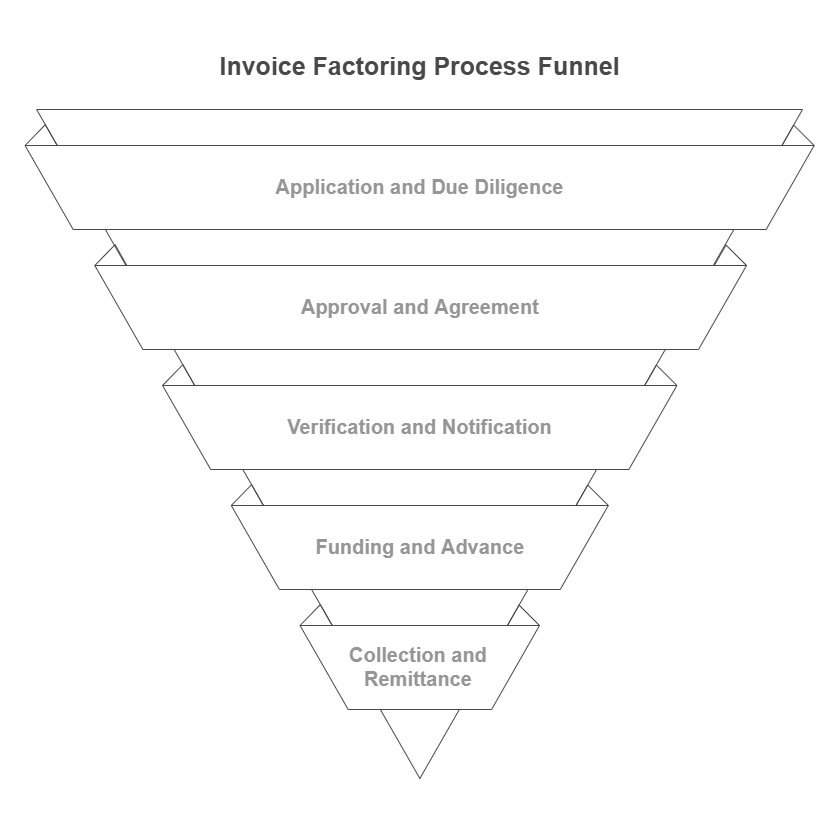
Understanding the invoice factoring process helps businesses navigate transactions effectively and maximize benefits. The invoice factoring process involves several stages, each crucial to ensuring a smooth transaction between the business and the factoring company.
Stages of the Invoice Factoring Process
- Application and Due Diligence: The process begins with selecting a reputable factoring company and submitting an application. This includes providing financial statements, customer details, and invoice information. The factor conducts due diligence to assess the creditworthiness of the business’s customers and the risk associated with the invoices.
- Approval and Agreement: Once due diligence is complete, the factor reviews the application and decides on approval. If approved, both parties enter into a formal agreement outlining terms such as the advance rate, factoring fee, and contractual obligations.
- Verification and Notification: The factor verifies the authenticity of the invoices and informs customers about the factoring arrangement. This ensures transparency and smooth communication during the payment process.
- Funding and Advance: After verification, the factor provides an advance payment, typically 70-90% of the invoice value. This advance is transferred to the business’s bank account, providing immediate working capital.
- Collection and Remittance: The factor manages the collection process, ensuring timely payment from customers. They remit collected payments to the business according to the agreed schedule.
- Reserves and Final Settlement: The factor deducts their fee from the reserve amount held initially. Once all invoices are collected and reconciled, the factor provides a final settlement, including the remaining reserve balance.
- Ongoing Relationship and Reporting: Invoice factoring is an ongoing financing solution. Businesses can continue factoring new invoices, maintaining open communication and providing regular updates to the factor.
- Termination and Transition: Businesses may terminate the factoring agreement due to improved cash flow or changing financing needs. The termination process and associated fees are outlined in the agreement.
Ready to take the next step? Contact Guavas Finance today for a personalised invoice factoring quote.
Complete Invoice Factoring Application Process
The application process for invoice factoring is critical in establishing a successful relationship with a factoring company. It involves several steps, each designed to ensure the business’s eligibility and the terms of the factoring arrangement.
Steps to a Successful Invoice Factoring Application
- Researching and Selecting a Factoring Company: Businesses should conduct thorough research to find a factoring company that aligns with their needs. Factors to consider include industry expertise, reputation, and terms offered.
- Initial Consultation and Pre-qualification: Schedule a consultation to discuss specific requirements and assess eligibility. The factor evaluates the business’s industry, revenue, and customer creditworthiness.
- Application Submission: Submit a detailed application with financial statements, customer details, and invoice information. Accuracy and completeness are crucial for a smooth process.
- Due Diligence and Underwriting: The factor conducts a detailed analysis of the business’s financials and customer relationships to assess risk.
- Credit Approval and Terms Negotiation: Based on due diligence, the factor makes a credit approval decision. Negotiate terms such as the advance rate and factoring fee.
- Factoring Agreement and Documentation: Enter into a formal agreement outlining rights and responsibilities. Review the agreement thoroughly to ensure it reflects your understanding.
- Notification and Customer Verification: Inform customers about the factoring arrangement and verify invoice details with the factor.
- Funding and Initial Advance: Once the agreement is in place, receive an initial advance payment, providing immediate working capital.
- Ongoing Reporting and Communication: Maintain open communication and submit periodic reports to keep the factor updated on the status of outstanding invoices.
- Credit Control and Collection: The factor handles credit control and collections, streamlining the process and improving cash flow.
- Reserve and Final Settlement: The factor holds a reserve against potential risks and provides a final settlement once all invoices are collected.
Learn more about invoice financing vs invoice discounting to understand the benefits of each.
How Long Does The Invoice Factoring Process Take?
The timeline for receiving funds through invoice factoring varies based on several factors, including the complexity of the business and the efficiency of the factoring company. Understanding this timeline helps businesses plan their cash flow effectively.
The first advance is the slow one. Once a facility is live, subsequent funding cycles usually settle within a couple of business days.
Invoice Factoring Process Funding Timeline
- Application and Due Diligence Period: This stage can range from a few days to weeks, depending on the business’s complexity and the thoroughness of due diligence.
- Credit Approval and Terms Negotiation: The time taken for credit approval varies based on the responsiveness of the factor and the complexity of the business’s financials.
- Customer Verification and Notification: The duration depends on customer cooperation and the efficiency of the verification process.
- Initial Funding and Advance: Typically takes a few business days to a week, depending on the volume of invoices and the factor’s processes.
- Ongoing Funding and Advances: Subsequent funding cycles are usually faster, occurring within a couple of business days.
- Collection and Remittance: The collection period varies based on customer payment terms and the factor’s collection efficiency.
Factors Influencing the Invoice Factoring Process Timeline
Several factors can impact the overall funding timeline in invoice factoring:
- Complexity of Due Diligence: More complex businesses may require longer due diligence periods.
- Efficiency of Communication: Effective communication between the business and the factor can streamline the process.
- Verification Process: Customer cooperation in the verification process affects the timeline.
- Documentation and Responsiveness: Promptly providing required documentation expedites the process.
- Factoring Company Efficiency: The factor’s efficiency and streamlined processes significantly impact funding speed.
- Volume and Complexity of Invoices: The number and complexity of invoices influence verification, funding, and collection times.
- Industry and Customer Payment Terms: Industries with longer payment cycles may result in longer timelines.
- Collaborative Approach: Open communication and collaboration with the factor can expedite the process.
Why You Should Consider Using Guavas for the Invoice Factoring Process?
Guavas Finance arranges invoice factoring across a panel of specialist funders, giving businesses the flexibility and support they need to manage cash flow effectively. With a focus on customer satisfaction and transparent terms, Guavas makes the factoring process a straightforward one. Why trust us as a leading invoice factoring broker in the UK?
- Industry Expertise: Guavas has extensive experience across various industries, sharing insights and matching businesses to solutions tailored to specific business needs.
- Competitive Rates: With competitive advance rates and factoring fees available across our panel, Guavas arranges cost-effective financing solutions.
- Efficient Processes: Guavas’s streamlined processes keep applications moving quickly and collections running smoothly, minimizing disruptions to your business.
- Customer Support: Dedicated support teams are available to assist with any queries or concerns, ensuring a smooth factoring experience.
- Flexible Options: Whether you need spot factoring or whole ledger factoring, Guavas arranges flexible options to suit your business requirements.