
Small business loans fuel growth for entrepreneurs. You need capital to buy equipment, hire staff, manage cash flow, or expand operations. Understanding these loans helps you make smart financial decisions for your business future.
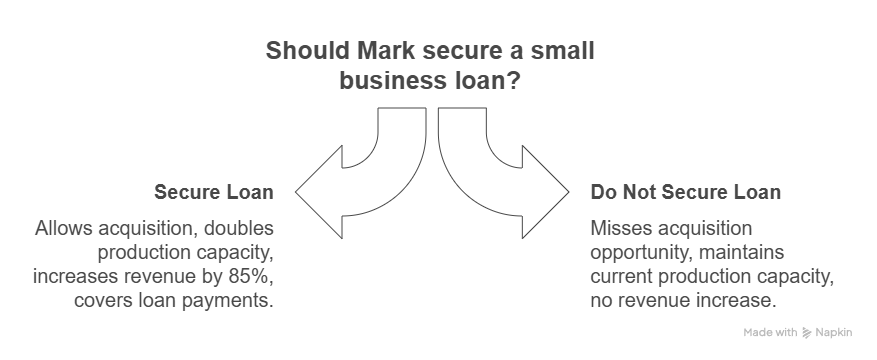
Consider Mark, who runs a small manufacturing company producing custom furniture. After five years of steady growth, he identified an opportunity to acquire a competitor’s business that would double his production capacity and client base. The acquisition required £250,000—far more than his available cash reserves. By securing a small business loan with favorable terms, Mark completed the acquisition and increased his annual revenue by 85% within the first year. The additional income easily covered his loan payments while significantly increasing his market share.
This guide covers everything about small business loans. You’ll learn about loan types, application processes, eligibility requirements, and alternatives. Whether you’re launching a startup or growing an established business, this information will help you secure the funding you need.
Understanding Small Business Loans
Small business loans provide capital for specific business purposes. They differ from personal loans by addressing unique business challenges like seasonal fluctuations or expansion needs.
These loans involve borrowing money that you repay with interest over a set period. Terms vary based on loan type, lender, and your financial health. Understanding the basics helps you make better borrowing decisions.
Small business loans help you:
- Start a new business
- Open additional locations
- Buy inventory or equipment
- Hire more employees
- Cover cash flow gaps
- Refinance existing debt
- Fund marketing campaigns
Business loans offer advantages over personal financing options. They often feature better terms for business expenses, and the interest is usually tax-deductible.
Before applying, ask yourself:
- How much money do I need?
- What will I use the funds for?
- How will this loan help generate profit?
- What repayment schedule works with my cash flow?
- What collateral can I offer?
Honest answers to these questions guide you toward the right loan amount and type, setting you up for approval and successful repayment.
Types of Small Business Loans
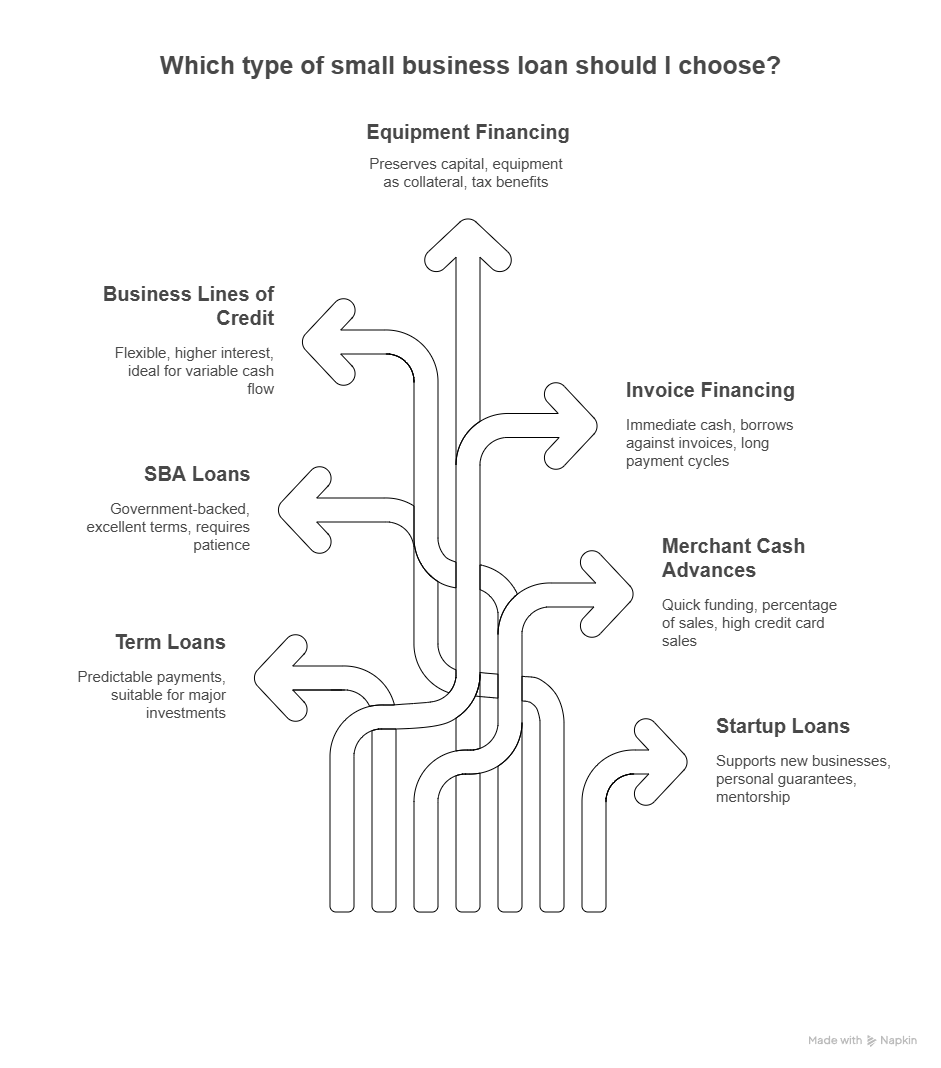
The UK business financing world offers many loan options. Each serves different needs and situations. Finding the right match improves your chances of approval and success.
For a wider view of the market, see our guide to the types of business loans explained.
Term Loans
Term loans provide a lump sum you repay over a fixed period. They come in short-term (under one year), medium-term (1-5 years), and long-term (5+ years) options.
Short-term loans feature higher interest rates but deliver quick capital for immediate needs like inventory purchases or seasonal cash flow gaps. Long-term loans offer lower rates and work better for major investments like property purchases or equipment upgrades.
Term loans create predictable payments for easier budgeting. Most require good credit scores and established business history.
Start Up Loans
The UK government’s Start Up Loans programme offers personal loans for business purposes ranging from £500 to £25,000. These loans feature a fixed interest rate of 6% and repayment terms of 1-5 years.
Beyond funding, Start Up Loans include 12 months of free business mentoring to help new entrepreneurs succeed. The application process involves creating a business plan and cash flow forecast, with decisions typically made within a few weeks.
These loans are designed specifically for new businesses trading for less than 36 months, making them an excellent option for entrepreneurs who might not qualify for traditional bank financing. Our full guide to Start Up Loans covers eligibility, timescales and the risks in detail.
Business Lines of Credit
A business line of credit gives you access to funds you can draw as needed. You pay interest only on the amount you use, creating flexibility for managing cash flow fluctuations or unexpected expenses.
Think of it as a financial tool you can tap into when needed. You can borrow, repay, and borrow again without reapplying.
Lines of credit carry higher interest rates than term loans but offer unmatched flexibility. They work well for businesses with variable cash flow needs.
Equipment Financing
Equipment financing helps you buy machinery, vehicles, or technology without paying the full cost upfront. The equipment itself serves as collateral, making these loans easier to qualify for than unsecured options.
This option preserves your working capital while giving you the tools you need to operate. Loan terms usually match the expected life of the equipment, and some arrangements offer tax benefits through depreciation.
Equipment financing works especially well for manufacturing, construction, transportation, restaurants, and healthcare businesses that rely on expensive equipment. Read more about how asset finance is arranged.
Invoice Financing
Invoice financing lets you borrow against unpaid customer invoices. Instead of waiting 30, 60, or 90 days for payment, you get cash immediately.
You receive an advance of 80-90% of the invoice value right away. When your customer pays, you get the remaining balance minus the lender’s fee. This option helps businesses with long payment cycles or those working with large clients who take weeks or months to pay. See how invoice finance works in practice.
Merchant Cash Advances
Merchant cash advances provide upfront capital in exchange for a percentage of your future credit card sales. Instead of fixed monthly payments, the lender takes a set percentage of your daily credit card transactions until repayment.
This option delivers quick funding (often within days) with minimal paperwork. Approval focuses more on your sales volume than credit score, helping businesses with less-than-perfect credit.
Merchant cash advances cost more than traditional loans but work well for businesses with high credit card sales volumes needing fast access to capital. Our guide to how merchant cash advances work sets out the costs in full.
The Loan Application Process for Small Business Loans
The loan application process requires preparation and strategic thinking. Understanding each step helps you approach it confidently and increases your approval chances.
Start with self-assessment. Before talking to lenders, determine exactly how much money you need, what you’ll use it for, and how it will generate returns. This clarity helps you choose the right loan and strengthens your application by showing thoughtful planning.
Research potential lenders that match your business profile. Different lenders specialise in different industries, loan sizes, and risk levels. Banks offer the best rates but have strict requirements. Online lenders process applications faster with more flexible criteria but charge higher rates. Credit unions often provide personalised service and competitive rates for members.
Gather all necessary documentation before starting applications. This preparation prevents delays. Essential documents include:
- Business and personal tax returns (2-3 years)
- Financial statements
- Bank statements
- Business licenses and registrations
- Business plan
- Profit and loss statements
- Balance sheets
- Cash flow projections
Complete the loan application carefully. Most lenders offer online applications, though some traditional banks prefer in-person meetings. Accuracy matters—errors can delay processing or cause rejection.
After submission, the lender reviews your application thoroughly. This evaluation includes:
- Credit checks (both business and personal)
- Financial analysis of your business
- Assessment of your industry and market position
- Verification of all information
- Evaluation of collateral (if applicable)
Review timelines vary widely. Online lenders might decide within hours or days, while banks often take weeks. Government-backed loans typically have the longest review periods, sometimes extending to several months.
If approved, you’ll receive a loan offer detailing:
- Loan amount
- Interest rate
- Repayment schedule
- Fees and charges
- Collateral requirements
- Personal guarantee requirements
- Any restrictions or covenants
Review these terms carefully before accepting. Don’t hesitate to negotiate if certain aspects don’t work for you. Many lenders have flexibility, especially for strong applicants.
Upon accepting the terms, you’ll sign the final loan agreement. Funding timelines vary—some online lenders deposit funds within 24 hours, while traditional loans might take several days or weeks.
If rejected, ask for feedback about why. This information helps strengthen future applications or identify more suitable financing options.
Key Eligibility Criteria for Small Business Loans
Understanding eligibility criteria helps you assess your qualification prospects before investing time in applications. While requirements vary between lenders and loan types, several key factors influence approval decisions.
Credit Scores and History
Your personal and business credit scores impact loan eligibility significantly. Lenders use these scores to assess risk. Most traditional lenders prefer personal credit scores above 680 for optimal terms, though online lenders may accept scores as low as 500 (with higher interest rates).
Business credit scores from agencies like Experian, Equifax, and Creditsafe matter for established businesses. These scores reflect your payment history with suppliers, lenders, and service providers.
Lenders also examine your credit history for red flags such as:
- Recent bankruptcies
- County Court Judgments (CCJs)
- Late payments
- High credit utilisation
Review your credit reports before applying and address any errors or issues.
Time in Business
Your business’s operating history directly influences loan eligibility. Lenders view established businesses as lower risk, with most banks requiring at least 2-3 years in business for standard loans. Online lenders often accept businesses with 6-12 months of operation, while Start Up Loans cater to newer ventures.
This criterion reflects a simple reality: businesses that have survived initial challenges demonstrate staying power. If you’re newer, prepare to compensate with stronger performance in other areas or consider startup-specific financing options.
Revenue and Cash Flow
Consistent revenue and positive cash flow demonstrate your ability to repay a loan. Most lenders establish minimum annual revenue requirements, typically ranging from £50,000 to £250,000 depending on the lender and loan type.
Beyond total revenue, lenders analyse your cash flow patterns. They want to see that your business generates enough free cash flow to cover existing obligations plus the new loan payments with room to spare. Prepare detailed cash flow statements showing both past performance and future projections that account for loan repayment.
Debt-to-Income Ratio
Your debt-to-income (DTI) ratio measures existing debt obligations against income. Lenders calculate this ratio to ensure you’re not overextended financially. Most prefer a DTI below 43%, though requirements vary.
To calculate your business DTI, divide your total monthly debt payments by your monthly gross income. If your ratio exceeds lender thresholds, consider paying down existing debt before applying for new financing.
Industry and Business Model
Some industries face greater scrutiny due to perceived risk or regulatory complexity. Businesses in highly regulated sectors, those with high failure rates (like restaurants), or cash-intensive operations often encounter stricter requirements or higher rates.
Your business model also matters. Lenders favour businesses with diversified revenue streams, recurring revenue models, and established customer bases over those reliant on a single product, customer, or seasonal demand.
Collateral and Personal Guarantees
Many business loans require collateral—assets the lender can claim if you default. Common collateral includes:
- Business equipment
- Real estate
- Inventory
- Accounts receivable
- Cash savings or investments
The value and liquidity of your collateral influence both loan approval and terms. Easily sold assets typically secure better rates than specialised equipment with limited resale markets.
Most small business loans also require personal guarantees from owners with significant stakes (typically 20%+ ownership). This guarantee makes you personally liable for the debt if your business cannot repay it—extending the lender’s security beyond business assets to your personal finances.
How You Should Prepare Your Business for a Loan
Preparing your business for a loan application increases your approval chances and helps secure favourable terms. Start this preparation months before you need funding to strengthen your position and address weaknesses.
Conduct a thorough financial health assessment. Review your financial statements, including profit and loss statements, balance sheets, and cash flow statements. Look for concerning trends or ratios that might raise red flags for lenders. Common issues include declining revenues, inconsistent profitability, or excessive debt relative to income. Addressing these issues before applying shows financial responsibility and strengthens your application.
Improve your credit profiles—both business and personal. Request your credit reports from major bureaus and review them for errors or negative items. Dispute inaccuracies and resolve outstanding issues. Simple steps like reducing credit utilisation (keeping balances below 30% of available credit), making on-time payments, and avoiding new credit applications in the months before applying can boost your scores significantly.
Organise your business operations and documentation. Ensure your business licences and registrations are current, tax filings are up-to-date, and accounting systems accurately track income and expenses. Separate personal and business finances completely—mixed finances raise red flags for lenders and complicate the application process.
Develop a detailed business plan that clearly shows how you’ll use the loan funds and how this investment will generate returns. Include market analysis, competitive positioning, growth strategies, and detailed financial projections. This plan demonstrates that you’ve thought carefully about the loan’s purpose and have a realistic strategy for leveraging the funds.
Create realistic financial forecasts showing revenue, expenses, and cash flow with and without the loan. These projections should clearly illustrate how the loan enables growth or solves specific business challenges. Include best-case, worst-case, and most-likely scenarios to show you’ve considered various outcomes and have contingency plans.
Strengthen your collateral position before applying. If you plan to offer specific assets as collateral, ensure they’re properly valued and documented. For equipment or property, recent appraisals help establish clear value. For inventory or accounts receivable, maintain detailed, up-to-date records. Strong collateral can offset weaknesses in other areas of your application.
Research potential lenders thoroughly to identify those most likely to approve your specific business profile. Different lenders specialise in different industries, business sizes, and loan types. Some have higher approval rates for startups, while others prefer established businesses. Some focus on specific industries where they have specialised knowledge. Targeting lenders that regularly work with businesses similar to yours increases your approval chances.
Remember that preparation isn’t just about getting approved—it’s about securing the best possible terms. Even small improvements in interest rates or repayment terms can save thousands over the life of the loan.
Common Documents Required for Loan Applications
When applying for a small business loan, proper documentation proves crucial. Lenders need comprehensive information to evaluate your business’s financial health and creditworthiness. Being prepared with the right documents streamlines the application process and demonstrates your professionalism.
Business Plan
A well-crafted business plan serves as the foundation of your loan application. Include:
- Your business concept and model
- Market analysis and competitive landscape
- Management team and organisational structure
- Marketing and sales strategies
- Financial projections (3-5 years)
- Detailed explanation of how you’ll use the loan funds
For established businesses, include information about your company’s history, growth trajectory, and major achievements. For startups, focus on your vision, market opportunity, and implementation strategy. Make sure your plan clearly shows how the loan will contribute to your business’s success and generate sufficient returns to cover repayment.
Financial Statements
Lenders require comprehensive financial statements to assess your business’s financial health:
- Balance Sheet: Shows your business’s assets, liabilities, and equity at a specific point in time.
- Income Statement (Profit & Loss): Details your revenue, expenses, and profitability over a specific period, typically the last 2-3 fiscal years plus year-to-date figures.
- Cash Flow Statement: Shows how cash moves through your business, including operating activities, investments, and financing.
- Accounts Receivable and Payable Aging Reports: Lists outstanding customer invoices and bills you owe, organised by age (30, 60, 90+ days).
Ensure these statements are accurate, up-to-date, and professionally prepared. Many lenders prefer statements prepared by an accountant, particularly for larger loan amounts.
Tax Returns
Provide both business and personal tax returns for the past 2-3 years. These documents verify your reported income and demonstrate tax compliance. For sole proprietorships and pass-through entities, personal tax returns are especially important as they reflect business income. Ensure all tax filings are current—outstanding tax issues can immediately disqualify your application.
Bank Statements
Most lenders request 3-12 months of business bank statements to verify cash flow patterns and reconcile them with your financial statements. These documents help lenders confirm that your business generates consistent revenue and maintains adequate cash reserves. Some lenders may also request personal bank statements, particularly for sole proprietors or when personal guarantees are involved.
Legal Documents
Prepare copies of essential legal documents, including:
- Business registration or incorporation papers
- Business licences and permits
- Franchise agreements (if applicable)
- Commercial leases or property ownership documents
- Contracts with major suppliers or customers
- Partnership agreements or corporate bylaws
- VAT registration (if applicable)
These documents verify your business’s legal status and operating authority.
Collateral Documentation
If you’re applying for a secured loan, prepare documentation for assets you’ll offer as collateral:
- Property: Deeds, recent appraisals, and information about existing liens
- Equipment: Purchase receipts, current valuations, and maintenance records
- Inventory: Detailed inventory lists with valuations
- Accounts receivable: Customer lists and aging reports
Proper documentation of collateral value can strengthen your application and potentially secure better loan terms.
Personal Information
For small business loans, lenders typically require personal information from all owners with 20% or greater ownership stake:
- Personal identification (passport, driving licence)
- CV highlighting relevant experience
- Personal financial statement detailing assets and liabilities
- Proof of address (utility bills, bank statements)
This information helps lenders assess the character and capability of the business’s leadership team.
Organising these documents before beginning the application process saves time and demonstrates your preparedness. Create a digital folder with all required documentation, ensuring everything is current and accurately reflects your business’s situation.
Small Business Loan Interest Rates and Terms Explained
Understanding interest rates and loan terms helps you evaluate small business loan options. These factors impact both the total cost of borrowing and how the loan fits into your business’s financial structure.
Interest Rate Structures
Small business loans typically feature one of two interest rate structures:
- Fixed Interest Rates: The rate remains constant throughout the loan term, providing predictable payments that simplify budgeting and cash flow planning. Fixed rates protect you from market fluctuations but may start slightly higher than variable rates.
- Variable Interest Rates: These rates fluctuate based on changes to an underlying index (like the Bank of England base rate). Variable rates often start lower than fixed rates but introduce uncertainty into your repayment schedule. Some loans include rate caps that limit how high variable rates can climb.
The interest rate you qualify for depends on multiple factors:
- Your personal and business credit scores
- Time in business
- Annual revenue
- Industry risk assessment
- Collateral provided
- Loan type and term length
- Current market conditions
As a general guideline, interest rates typically range from:
- Bank term loans: 4-13%
- Government-backed loans: 5-9.5%
- Online term loans: 7-30%
- Lines of credit: 8-24%
- Invoice financing: 13-60% APR equivalent
- Merchant cash advances: 20-250% APR equivalent
Understanding APR vs Interest Rate
The Annual Percentage Rate (APR) provides a more comprehensive view of borrowing costs than the interest rate alone. APR includes the base interest rate plus origination fees, processing fees, and other charges amortized over the loan term. When comparing loan offers, always focus on the APR rather than just the stated interest rate to understand the true cost of borrowing.
Loan Terms and Repayment Structures
Loan term refers to the length of time you have to repay the borrowed amount. Terms vary widely based on loan type:
- Short-term loans: 3-18 months
- Medium-term loans: 1-5 years
- Long-term loans: 5-25 years
- Start Up Loans: 1-5 years
- Equipment financing: Typically aligned with the equipment’s useful life
Longer terms generally mean lower monthly payments but higher total interest costs over the life of the loan. Shorter terms have higher monthly payments but lower total interest costs. The optimal term balances affordable monthly payments with reasonable total borrowing costs.
Most small business loans use one of these repayment structures:
- Traditional Term Loan: Fixed monthly payments of principal and interest, with each payment reducing the outstanding balance until fully repaid.
- Interest-Only Period: Some loans offer an initial period where you pay only interest, followed by fully amortized payments of principal and interest. This structure provides lower initial payments but results in higher payments later.
- Balloon Payment: Regular payments (often interest-only) with a large final payment that covers the remaining principal. While this structure offers lower regular payments, the balloon payment can present significant risk if you can’t refinance when it comes due.
- Factor Rate (for Merchant Cash Advances): Instead of interest, these products use a factor rate (like 1.2 or 1.5) multiplied by the borrowed amount to determine the total repayment amount. Payments are typically made daily or weekly as a percentage of sales.
Additional Fees and Costs
Beyond interest, small business loans often include additional fees that impact the total cost:
- Arrangement Fee: One-time charge for processing the loan, typically 1-5% of the loan amount.
- Guarantee Fee: Specific to government-backed loans, this fee covers the government’s guarantee.
- Early Repayment Charges: Fees for paying off the loan before the end of the term, which compensate the lender for lost interest income.
- Late Payment Fees: Penalties for missed or late payments, often a percentage of the payment amount or a flat fee.
- Maintenance Fees: Ongoing charges for servicing the loan or maintaining a line of credit.
When evaluating loan offers, request a complete fee schedule and calculate the total cost of borrowing under different scenarios, including early repayment. This comprehensive analysis helps you select the most cost-effective financing option for your business.
Alternative Financing Options for Small Businesses in the UK
When traditional small business loans aren’t accessible or appropriate for your needs, numerous alternative financing options can provide the capital necessary for growth and operations. Understanding these alternatives expands your funding toolkit and may reveal more suitable solutions for your specific situation.
Crowdfunding
Crowdfunding platforms allow businesses to raise capital from numerous individuals who each contribute relatively small amounts. This approach offers several advantages beyond just funding:
- Market validation for new products or services
- Pre-sales opportunities
- Community building and customer engagement
- No debt or equity surrender (for reward-based crowdfunding)
Different crowdfunding models suit different business needs:
- Reward-based crowdfunding (Kickstarter, Indiegogo): Backers receive products, experiences, or recognition in exchange for their support. Ideal for product-based businesses with compelling offerings.
- Equity crowdfunding (Seedrs, Crowdcube): Investors receive shares in your company. Suitable for scalable businesses with significant growth potential.
- Debt crowdfunding (Funding Circle): Investors lend money to be repaid with interest. Works well for established businesses with proven revenue.
- Donation-based crowdfunding (GoFundMe): Contributors give without expectation of material return. Most appropriate for social enterprises or businesses with strong community connections.
Successful crowdfunding requires significant preparation, compelling storytelling, and active campaign management. Most platforms charge fees ranging from 3-8% of funds raised, plus payment processing fees.
Angel Investors
Angel investors are high-net-worth individuals who provide capital in exchange for ownership equity or convertible debt. Beyond funding, angels often offer valuable industry expertise, connections, and mentorship.
Angels typically invest £10,000-£500,000 in early-stage businesses with high growth potential. They expect significant returns (often 10x or more) within 5-7 years through an exit event like acquisition or IPO.
To attract angel investment:
- Develop a compelling pitch deck highlighting your unique value proposition
- Prepare detailed financial projections showing growth potential
- Network through angel groups, industry events, and entrepreneurial ecosystems
- Consider platforms like the UK Business Angels Association that connect entrepreneurs with potential investors
While angel funding doesn’t require monthly repayments like loans, it does mean surrendering partial ownership and potentially some decision-making control.
Venture Capital
Venture capital firms invest pooled funds in high-growth potential businesses in exchange for equity. They typically focus on scalable businesses with potential for significant market disruption and rapid growth.
Venture capital investments usually start at £1 million and can reach tens of millions for later funding rounds. These investors look for businesses that can potentially deliver 10-20x returns within 5-10 years.
VC funding works best for businesses with:
- Innovative technology or business models
- Large addressable markets
- Strong founding teams
- Clear paths to significant scale
- Potential for eventual acquisition or IPO
The VC funding process is highly competitive and involves rigorous due diligence. If successful, you gain not only capital but also strategic guidance, industry connections, and credibility. However, you also surrender significant equity and often accept investor representation on your board of directors.
Grants
Business grants provide funding that doesn’t require repayment or equity surrender. Government agencies, foundations, corporations, and nonprofit organisations offer grants to support specific types of businesses or activities.
Grants often target:
- Innovation and research
- Minority or women-owned businesses
- Rural enterprises
- Green/sustainable businesses
- Job creation initiatives
The application process for grants is typically competitive and time-consuming, requiring detailed proposals and strict compliance with application guidelines. While “free money” sounds ideal, grants usually come with specific requirements for how funds can be used and often require detailed reporting on outcomes.
Peer-to-Peer Lending
Peer-to-peer (P2P) lending platforms connect businesses directly with individual investors willing to lend money. These online platforms streamline the lending process, often providing faster decisions than traditional banks.
P2P loans typically range from £1,000 to £100,000 with terms of 1-5 years. Interest rates vary widely based on your credit profile and business strength, typically ranging from 6% to 36%.
The application process is similar to traditional loans but often with less stringent requirements. Most P2P platforms evaluate applications using algorithms that consider both traditional factors (credit score, revenue) and alternative data points.
Equipment Leasing
Rather than purchasing equipment outright or financing its purchase, leasing allows you to rent equipment for a specified period. This option preserves capital and offers flexibility.
Leasing typically requires lower upfront costs than purchasing and may include maintenance in the monthly payment. At the end of the lease term, you can often choose to purchase the equipment at a reduced price, upgrade to newer equipment, or end the relationship.
This option works particularly well for equipment that becomes obsolete quickly (like technology) or for businesses wanting to preserve capital for other investments.
Can My Application Be Rejected?
Yes, loan applications can be rejected for various reasons. Understanding these potential pitfalls helps you address weaknesses before applying or reapplying. Common reasons for rejection include:
Poor Credit History
Lenders view your credit history as a predictor of future behavior. Recent bankruptcies, defaults, CCJs, or consistent late payments raise significant red flags. Even if your business finances are solid, poor personal credit can derail your application, particularly for smaller businesses where the owner’s personal finances are closely scrutinized.
If rejected for credit reasons, request a copy of your credit report, address any errors, and work to improve your score before reapplying. Consider credit-builder products or secured credit cards to rebuild your credit profile. There are also business loans built for adverse credit if your file is not clean.
Insufficient Cash Flow
Lenders need confidence that your business generates enough consistent cash flow to cover existing obligations plus the new loan payments. If your financial statements show irregular revenue, seasonal fluctuations without adequate reserves, or negative cash flow trends, lenders may determine you can’t reliably service the debt.
To address cash flow concerns, implement stronger cash management practices, reduce unnecessary expenses, and consider applying during your strongest cash flow period. You might also request a smaller loan amount or longer repayment terms to reduce monthly payment obligations.
Limited Business History
Many lenders require 1-2 years of operating history before approving traditional business loans. This requirement reflects the high failure rate of new businesses and the difficulty of predicting future performance without historical data.
If rejected due to limited history, explore startup-specific financing options like Start Up Loans, crowdfunding, or angel investment. Alternatively, consider building your business with personal resources or smaller alternative financing options until you establish the track record needed for traditional loans.
Incomplete or Disorganised Application
Missing documents, inconsistent information, or poorly prepared financial statements can lead to automatic rejection. Lenders process numerous applications and may not invest time helping you correct or complete your submission.
If rejected for application issues, request specific feedback about what was missing or problematic. Address these issues completely before reapplying, and consider working with an accountant or financial advisor to ensure your application is professional and comprehensive.
Industry Concerns
Some industries face higher rejection rates due to perceived risk, regulatory complexity, or historical performance. Restaurants, retail businesses, and construction companies often face greater scrutiny due to higher failure rates. Similarly, businesses in emerging or controversial industries may struggle to find traditional financing.
If industry concerns affect your application, seek lenders specializing in your specific sector who better understand its unique characteristics and risks. Industry-specific lenders often offer tailored products and more appropriate evaluation criteria.
Excessive Existing Debt
High debt-to-income ratios or numerous existing loans can trigger rejection, as lenders worry about your ability to take on additional obligations. This concern is particularly relevant if your existing debt includes high-interest products like credit cards or merchant cash advances.
To address debt concerns, focus on paying down existing obligations before applying for new financing. Consider debt consolidation options to simplify your obligations and potentially reduce interest costs. Demonstrating a decreasing debt trend can significantly strengthen future applications.
Remember that rejection isn’t necessarily permanent. Many successful businesses face initial loan rejections before securing appropriate financing. Use the feedback from rejections constructively to strengthen your business fundamentals and improve future applications.
By understanding the UK business loan landscape, preparing thoroughly, and exploring all available options, you can secure the funding needed to achieve your business goals. Remember to compare offers from multiple lenders, negotiate terms when possible, and choose the financing solution that best aligns with your long-term vision.
Securing the funding necessary for your business’s growth and success is within your reach. By understanding the overview of small business loans, evaluating the qualification criteria, exploring the best lenders in the UK market, and learning how to navigate the loan application process, you can take confident steps toward securing the financing you need. Remember to consider the specific needs of your business, assess your eligibility, and prepare a well-documented loan application. With the right approach and a thorough understanding of the sub-topics covered in this article, you can navigate the world of small business loans and propel your business toward greater achievements.
Guavas Finance arranges business loans across a panel of funders. When you are ready to compare terms, get a quote.